
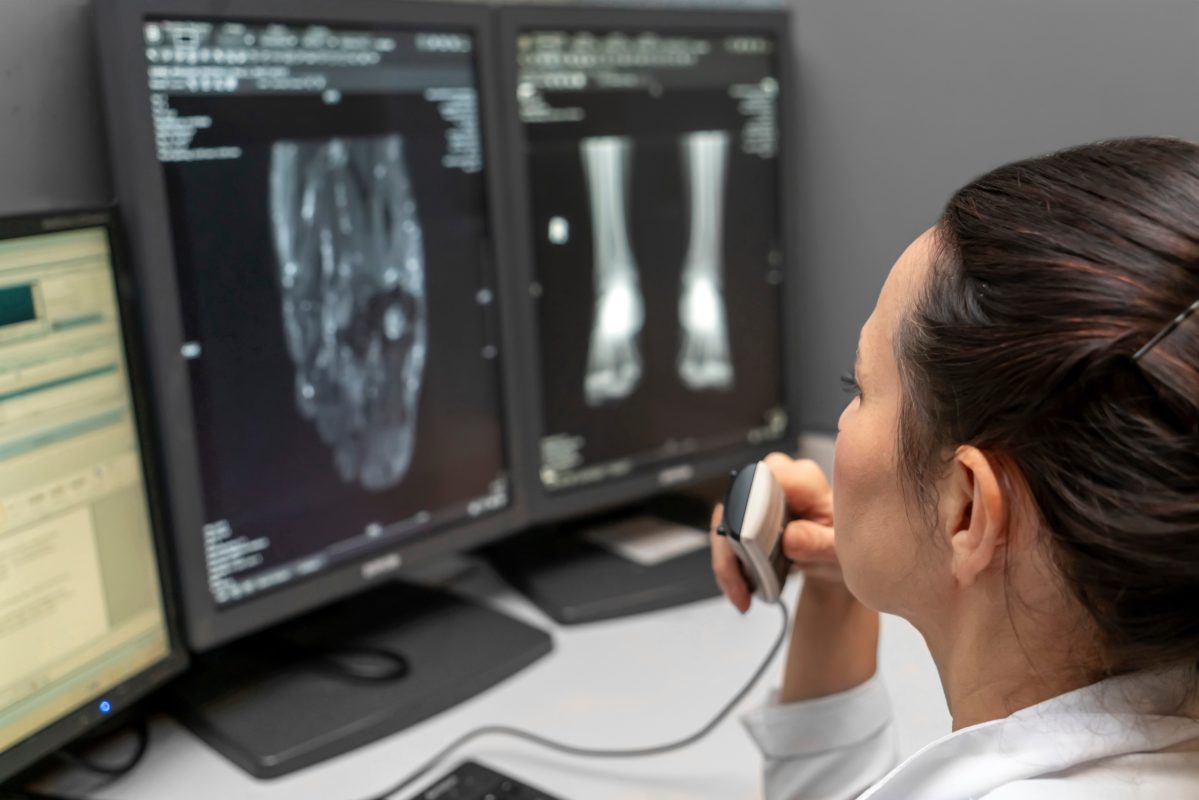
How to Read Your Radiology Report: A Plain-Language Guide from Central Kentucky Radiology
If you’ve ever opened a radiology report and felt like you were reading another language, you’re not alone.
Terms like “increased attenuation,” “no acute abnormality,” and “correlate clinically” can be confusing and a little intimidating.
At Central Kentucky Radiology, our job isn’t just to read your imaging. We also help your care team understand what’s going on so they can treat you effectively. This guide gives you a plain-language overview of what you’re seeing in your report and what the different sections usually mean.
Key Takeaways from This Guide
- What a radiology report is and who it’s written for
- What the main sections mean, especially Findings and Impression
- What common phrases like “no acute abnormality” and “incidental finding” usually mean
- When to follow up with your doctor about your imaging results
What Is a Radiology Report?
A radiology report is the written summary your radiologist creates after reviewing your imaging exam. This might be an X-ray, CT scan, MRI, ultrasound, or nuclear medicine study.
In most cases, your report is sent directly to the provider who ordered the test, such as your primary care doctor, surgeon, or oncologist. They use that report, along with your symptoms, physical exam, and lab results, to decide on next steps.
Your report is not meant to scare you. It is meant to document what we see, in precise medical language, so your whole care team is on the same page.
Common Sections of a Radiology Report
Every practice and hospital system formats reports a little differently. However, most reports include some version of the sections below.
1. Patient and Exam Information
This is the basic “who, what, when” section. It often includes:
- Your name and date of birth
- The date and time of the exam
- The type of study (for example, “CT abdomen and pelvis with contrast” or “MRI brain without contrast”)
- An internal exam number or accession number
This part is mostly administrative, but it helps confirm that the right report is matched to the right patient and exam.
2. Clinical Information / Indication
Here you’ll usually see a short note about why the test was ordered. Examples include:
- “Abdominal pain, right lower quadrant. Rule out appendicitis.”
- “History of breast cancer. Evaluate new cough and shortness of breath.”
- “Follow-up on lung nodule seen on prior CT.”
This information comes from the ordering provider and sometimes from notes in your chart. It tells the radiologist what question your care team is trying to answer.
3. Technique
This section explains how the exam was performed. It may mention:
- The type of scanner (CT, MRI, etc.)
- Whether contrast was used (IV contrast, oral contrast, or none)
- The general region studied (chest, abdomen, pelvis, etc.)
For example: “CT scan of the chest performed with intravenous contrast. Axial and reconstructed coronal images were reviewed.”
You don’t need to memorize any of this. It can simply help you understand why one exam might look or feel different from another.
4. Findings
This is the longest and most detailed part of your report.
The radiologist goes through each area we are evaluating and describes what we see, both normal and abnormal. The language here can feel very technical because it is written for your medical team.
You may notice:
- Normal descriptions, such as “Lungs are clear” or “No acute fracture.”
- Measurements, such as the size of a nodule, cyst, or lymph node
- Comparisons to previous exams, such as “Stable compared to prior CT” or “Previously seen fluid collection has resolved.”
It can be tempting to fixate on a single phrase in this section. Try to remember that your provider is looking at the full picture, not one line in isolation.
5. Impression
If you read only one part of your report, this is usually the best place to start.
The Impression section is the radiologist’s summary and “big picture” interpretation. This is where we pull together the key findings and state what they most likely mean, often in just a few bullet points or sentences.
Examples might look like:
- “No evidence of acute stroke.”
- “Findings are most consistent with uncomplicated diverticulitis.”
- “Stable pulmonary nodule. Continued surveillance per clinical guidelines is recommended.”
Your doctor will typically look at the Impression first, then refer back to the detailed Findings as needed.
Common Phrases You Might See—and What They Usually Mean
Some phrases appear often in radiology reports and can sound vague or alarming. Here is what they usually mean in context.
“No acute abnormality”
This usually means there is no new, urgent problem that requires immediate attention, such as bleeding, a fracture, or a severe infection. It does not mean your scan is perfect in every way. It simply means nothing emergent was seen.
“Incidental finding”
An incidental finding is something we see on the scan that was not the main reason for the test and often is not causing symptoms. Examples include:
- A small kidney cyst
- Mild degenerative changes in the spine
- A benign liver lesion that has been stable for years
These are very common. Your provider will decide whether an incidental finding needs follow-up or can simply be noted and left alone.
“Correlate clinically”
This phrase can feel vague, but it has a very specific purpose. It means that what we see on the images should be interpreted together with your symptoms, exam, and lab results.
Radiology is one piece of the puzzle, not the whole picture. Your provider knows your history best, so they are the one to decide what the imaging truly means for you.
“Recommend follow-up imaging”
Sometimes we recommend another scan in a certain number of months. This commonly happens for a small lung nodule or thyroid nodule. This does not automatically mean something is cancerous or dangerous.
Often, follow-up imaging is recommended to:
- Make sure a finding stays stable over time
- Confirm that something suspected to be benign truly is not changing
- Document improvement or resolution after treatment
If you see this phrase, your ordering provider can explain the timing and purpose of the follow-up.
How Central Kentucky Radiology Supports Your Care
At Central Kentucky Radiology, our radiologists work behind the scenes every day, reading imaging studies for patients across Lexington and the surrounding region. You may not meet us in person, but we are an important part of your care team.
Our role includes:
- Carefully reviewing your imaging with the clinical question in mind
- Comparing current exams to prior studies when available
- Communicating clearly with your providers through detailed reports
- Highlighting any urgent or unexpected findings that may need quick action
We know that seeing your imaging results in an online portal can be both helpful and anxiety-provoking. A little context goes a long way, and we hope this guide makes your report feel less mysterious.
When to Ask Follow-Up Questions
Always reach out to your ordering provider if:
- You are unsure what the Impression section is saying
- You see a term you do not understand and it is worrying you
- Your report mentions follow-up imaging and you do not know when or how that will happen
- Your symptoms are getting worse or changing after the scan
If additional imaging is needed, your provider can work with Central Kentucky Radiology to schedule the most appropriate test and ensure your reports are shared promptly.
The Bottom Line
Radiology reports are written in medical language because they are designed for your healthcare team. That does not mean you cannot understand the basics.
If you remember just a few key points, let it be these:
- The Impression is the main summary—start there.
- Phrases like “no acute abnormality” and “incidental finding” are common and do not always mean something serious.
- Your radiology report is one part of your overall care. Your provider is the best person to explain what it means for you personally.
If you have questions about imaging or upcoming exams associated with Central Kentucky Radiology, talk with your provider. They can help you understand which tests are recommended and how your results will be used to guide your treatment.
Disclaimer: The information on this page is for general informational and educational purposes only and is not a substitute for professional medical advice, diagnosis, or treatment. Always talk with your physician or other qualified health provider with any questions you may have regarding a medical condition, test, or treatment. Never ignore or delay seeking professional medical advice because of something you have read on this website. Central Kentucky Radiology does not guarantee the completeness or accuracy of the information provided and is not responsible for any actions taken based on this content. If you are experiencing a medical emergency, call 911 or go to the nearest emergency department immediately.
